JamboJohn

Sunset

Mida Creek by dhow, the last stretch of the day

5.0(1 review)Departing from Watamu · 1 day · Dhow

Your guide: John Nyale

Local guide and safari organiser · Watamu, Kilifi County

Languages: Italian, English, Swahili, Giriama

  • Depends on the tide
  • Depends on the weather

A couple of hours on a traditional sailing boat on the creek, in the slot when the light drops. You sit, you don't paddle, and you come back in the dark.

The dhow is the sailing boat this coast has always used. On the creek it moves slowly, often pushed more by the current than by the wind, and the sound is water against the hull.

It is the simplest trip I run at Mida Creek: you don't need to swim, you don't need to paddle, and it works with small children too, as long as they stay seated. We go out in the late afternoon and come back once it is already dark.

What makes this one different

  • Slow sailing on a traditional dhow, with no engine running
  • The part of the day when the creek empties of noise and the light drops
  • No physical effort: you stay seated for the whole trip
  • Suitable for people who don't swim and for those travelling with small children
  • A short trip that fits easily into a day that is already full

How the trip runs

  1. Stage 1

    Late-afternoon pick-up

    I pick you up at your accommodation in Watamu. The time depends on the tide and on the hour the sun goes down, so it shifts from week to week: I confirm it the day before, not a month before.

  2. Stage 2

    Boarding

    You board from the jetty or from the bank, depending on the water level. Before we set off I show you where the life jackets are and how to move around on board: on a dhow you move very little and you stay seated.

  3. Stage 3

    Out on the creek

    We sail along the arm of water, with mangroves on both sides. The route depends on how much water there is: at low tide some areas are out of reach and we stay in the main channel.

  4. Stage 4

    The light going down

    For the last half hour the boat stops or slows right down. This is when the birds come back towards the mangroves and the creek goes quiet. There is nothing to do: you watch.

  5. Stage 5

    Back in the dark

    We come back once it is already dark, with a torch on board. From the creek I take everyone back to their accommodation: you get in with time for dinner.

What's included

  • The dhow trip on the creek, in the end-of-day slot
  • A life jacket on board for everyone
  • Return transfer from your accommodation in Watamu
  • Drinking water on board
  • My company throughout, and an explanation of how the creek works

What's not included

  • Any access fee or community contribution, unless the written proposal says otherwise
  • Dinner, and any drinks other than the water included
  • Camera gear and binoculars
  • Tips and personal expenses
  • Travel insurance

Who it suits

  • Anyone who wants a quiet trip with no physical effort
  • Families with small children, as long as they stay seated on board
  • People who don't swim and would rather stay on board
  • Anyone with a single free evening who doesn't want to travel far from Watamu

Who I'd steer away from it

  • Anyone looking for speed, an engine or adrenaline
  • Anyone who wants to get into the narrow channels between the mangroves: that needs the canoe
  • Anyone who can't cope with dusk mosquitoes even with repellent on
  • Anyone who wants a clear sky guaranteed: nobody can honestly sell you that

At a glance

Duration
1 day
Time on the road
2.5–4 hours
Departure
nel tardo pomeriggio, secondo la marea
Pick-up areas
Watamu
Group
from 2 to 12
Transport
Dhow
Languages
Italian, English, Swahili
Effort
Easy
Accessibility
Partly accessible
Price
from $45 per person

Departure, timings and transfers

The timing is built on two variables: the tide, which you need in order to sail, and the hour the sun goes down, which changes little here across the year. When the two don't line up, the trip moves to another day, not to another hour.

The dhow takes a small group and is never as crowded as an excursion boat. With a day's notice I can almost always arrange it, even if you are already on the coast.

The boat and access to the creek belong to the people who live there: in the written proposal I tell you who provides the boat and what stays locally.

Seasons, weather and natural conditions

At low tide the creek shrinks to a channel and some areas are out of reach; at high water there is more room to sail. Neither condition is better than the other in itself, but they change the route, and you find out which one you have on the day.

In the late afternoon the wind can get up suddenly. If that happens we come back early, or we don't go out at all: on a sailing boat the wind is not a decorative detail.

The birds coming back to the mangroves at the end of the day are the most consistent part of this trip, but they are wild animals: I promise no species, no numbers and no distances.

Things to know

What to bring

  • Insect repellent: on the creek at sunset you really do need it
  • A light long-sleeved top, again for the mosquitoes
  • A thin sweatshirt: out on the water the temperature drops after sunset
  • Shoes or sandals you don't mind getting wet while boarding
  • A small torch, or a charged phone, for the way back
  • A waterproof bag for your phone and documents

Safety

  • Life jackets on board for everyone, children included
  • On the dhow you stay seated: you only stand and move about when the boat is still
  • Children are always the direct responsibility of an adult
  • The trip is moved or cancelled in strong wind, storms or insufficient tide
  • There is a torch on board for the dark stretch on the way back

Respect for nature and people

  • We don't approach birds that are settling in for the night
  • No breaking mangrove branches to make room or to get a photograph
  • Nothing left behind on the creek, cigarette ends included
  • We don't cross other people's fishing nets and we don't pass through where people are working
  • Music on board only if the whole group wants it, and quietly in any case

Accessibility

You board from the jetty or from the bank depending on the tide, which means a step up and a hand to hold; on board you sit on low benches with no backrest. If you need assistance, write and tell me beforehand: in many cases it can be arranged, but I would rather know in advance than improvise on the bank.

Reviews

5/5 across 1 verified reviews

  • Il tramonto sul creek

    We set off on the right tide and stayed quiet almost the whole time. John knows every bend of the creek and explained the mangroves without turning it into a lecture. An hour and a half that went by in a flash.

    Original text

    Siamo partiti con la marea giusta e siamo rimasti in silenzio quasi tutto il tempo. John conosce ogni curva del creek e ci ha spiegato le mangrovie senza fare la lezione. Un'ora e mezza che è passata in un attimo.

    Marco e Sara, Italia

    Received directly

How I verify reviews

Questions about this experience

What happens if the weather or the conditions in the park change?

Safety comes before the programme. If the weather worsens, if the sea is not workable or if conditions in the park change, we talk it through and decide whether to alter the programme, postpone it or replace it with an alternative.

The conditions that apply in these cases are set out in the proposal you receive, so you know in advance how things are handled when the day is not the one we expected.

Are the experiences suitable for children?

Many of them can be, but there is no single answer: the duration, the length of the transfers and the timings all have to be weighed against age. A dawn departure with hours on the road is not the same thing for a four-year-old and for a twelve-year-old.

In the form all I need is the number of children and their age ranges. Names, dates of birth and other personal details are not required: those, if they are needed at all, come only when a property or a park asks for them.

I'm already in Watamu: can I arrange something at the last minute?

Write to me and I'll check what is available over the following days. I'll tell you what is realistic to put together at short notice and what is not.

What is included in the price?

Every proposal states explicitly what it covers: transport, entry fees, guide, meals, accommodation and activities. And it states what is left out as well, because that is usually where misunderstandings begin.

Before confirming you always receive a written summary with these points, so you can read it through calmly and ask me about anything that doesn't add up.

Related experiences

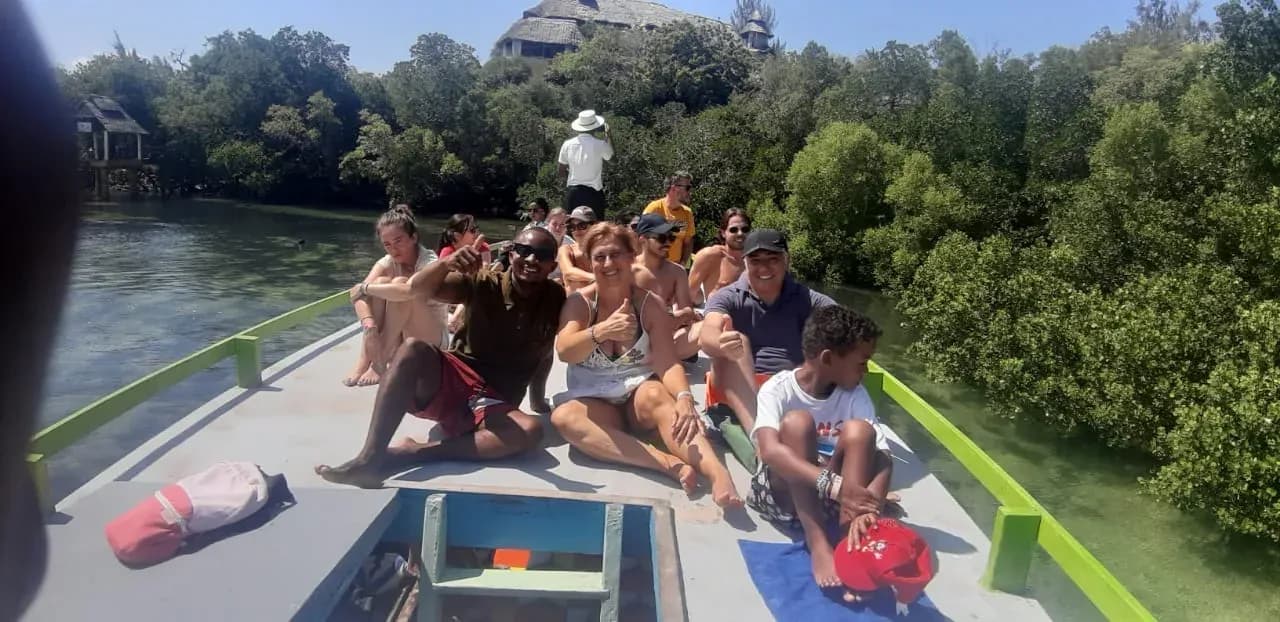
  • Guests sitting in the bow as the boat passes through the mangroves.
    NatureOcean

    Mida Creek by canoe, inside the mangrove channels

    A few hours by canoe in the channels of Mida Creek, with the tide deciding the time and the route. You really do paddle, and you move in silence.

    Duration
    1 day
    Transport
    Canoe or kayak
    Format
    Private or shared
    Price
    from $40 per person

    See the experience
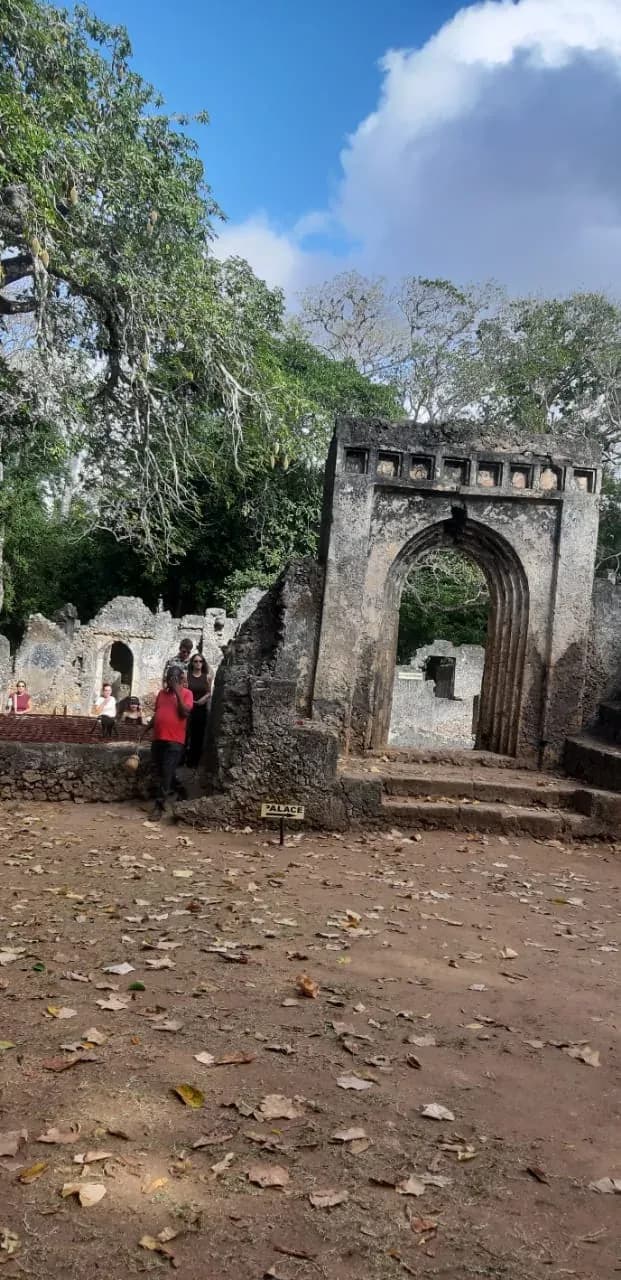
  • The stone arch at the entrance to a historic site, with visitors under the trees.
    CultureNature

    Gedi (Gede) and the Arabuko-Sokoke forest

    A morning split between the ruins of a Swahili town and the edge of the largest coastal forest left in East Africa.

    Duration
    1 day
    Transport
    Minivan
    Format
    Private or shared
    Price
    from $65 per person

    See the experience

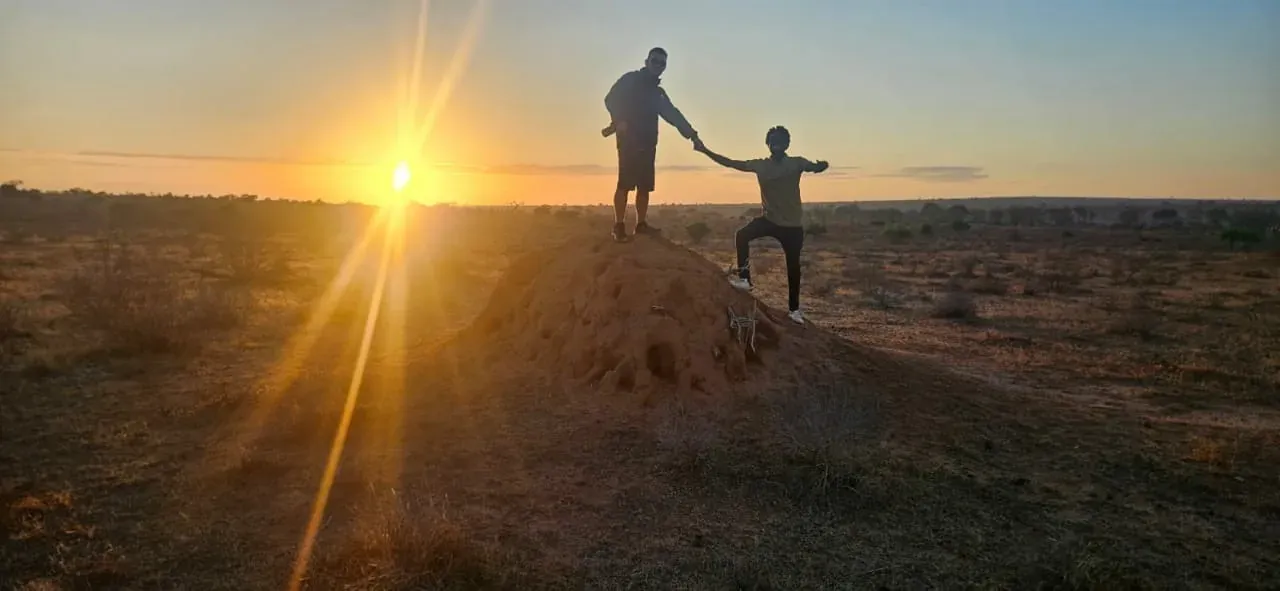
  • Two people backlit on a rise, facing the low sun over the plain.
    NatureSunset

    Marafa, the Nyari canyon in low light

    A sandstone canyon inland from Malindi, to the north, visited in the late afternoon because that is when the walls change colour.

    Duration
    1 day
    Transport
    Minivan
    Format
    Private or shared
    Price
    from $70 per person

    See the experience

Want to know if this fits the days you have?

Tell me how many of you there are and when: I'll tell you what's realistic and what isn't.

Get a proposal from JohnWhatsApp