JamboJohn

Culture and nature

Gedi (Gede) and the Arabuko-Sokoke forest

5.0(1 review)Departing from Watamu, Malindi · 1 day · Minivan

Your guide: John Nyale

Local guide and safari organiser · Watamu, Kilifi County

Languages: Italian, English, Swahili, Giriama

  • Depends on the weather
  • Sightings not guaranteed

A morning split between the ruins of a Swahili town and the edge of the largest coastal forest left in East Africa.

Gedi (Gede) is a ruined Swahili town, lived in for centuries and then abandoned. It is now inscribed on the UNESCO World Heritage List: what is left is walls of coral stone, a mosque, a palace, deep wells and huge trees that have grown up inside the rooms.

A few kilometres away Arabuko-Sokoke begins, the largest coastal forest remaining in East Africa and one of the most interesting places on this coast for birdwatching. The two stops sit well together because they tell you about the same piece of land from two different sides: the one people built, and the one that surrounded them.

What makes this one different

  • The ruins of Gedi, a UNESCO World Heritage site, visited slowly rather than at a run
  • The great mosque, the palace and the wells: what you actually understand about a Swahili town by looking at it from the inside
  • The edge of Arabuko-Sokoke, the largest coastal forest left in East Africa
  • Birdwatching in the early hours, when the forest is at its most active
  • A half day close to base: you get back and the afternoon is still free

How the trip runs

  1. Stage 1

    Leaving your accommodation

    I pick you up early, because that is the hour at which this trip makes sense. The drive is short: I use it to tell you what we are about to see, and why Gedi was abandoned without anyone knowing the reason for certain.

  2. Stage 2

    The ruins of Gedi

    We walk among the walls of the old town: the mosque, the sultan's house, the dwellings, the wells. We follow the marked path, in the shade of the trees that have grown up inside the ruins. Nobody climbs on the walls and nothing gets moved: this is an archaeological site, not a playground.

  3. Stage 3

    Into Arabuko-Sokoke

    We move on to the edge of the forest. From here we go on foot along a track, with long pauses and silence: you hear the birds before you see them. Some species of this forest have one of their last populations in the world here, which does not mean they show themselves on request.

  4. Stage 4

    A stop, and watching

    We stop in an open spot to have a drink and look around without hurrying. If the group feels like walking further, we walk further; if it would rather stay put, we stay put. I decide this part on the spot, depending on how it is going.

  5. Stage 5

    Back to the coast

    We head back towards the coast and I drop you at your accommodation. You are usually back around lunchtime, with the rest of the day still ahead of you.

What's included

  • Return transfer from your accommodation in Watamu or Malindi
  • My company for the whole half day
  • The visit to the Gedi ruins, with time to stop and ask questions
  • A guided walk in the section of forest chosen for the day
  • Drinking water during the trip

What's not included

  • Entrance tickets for the Gedi site and for the forest, unless the written proposal says otherwise
  • The local forest guide's fee, where the site requires one
  • Lunch, and any drinks other than the water included
  • Binoculars and camera gear
  • Tips and personal expenses

Who it suits

  • Anyone interested in history who wants to understand what the Swahili coast was before the resorts
  • Anyone who enjoys birdwatching, or wants to try it for the first time
  • Anyone with only half a day free who doesn't want to spend it in a car
  • Families with older children who are happy to walk

Who I'd steer away from it

  • Anyone who needs flat paths without obstacles
  • Anyone who wants certainty of seeing particular bird species
  • Anyone who gets bored when we stand still in one place for a long time
  • Anyone after a quick half-hour visit and then off again

At a glance

Duration
1 day
Time on the road
4–6 hours
Departure
07:30
Pick-up areas
Watamu, Malindi
Group
from 2 to 8
Transport
Minivan
Languages
Italian, English, Swahili
Effort
Easy
Accessibility
Partly accessible
Price
from $65 per person

Departure, timings and transfers

We meet at your accommodation in Watamu or Malindi. The distance is short, but the departure is early: that is the choice that makes the trip worth doing, because the forest in the morning is a different place from the forest at midday.

Opening hours and tickets at Gedi and Arabuko-Sokoke are handled by the bodies that run the two sites, not by me. If there are closures or restrictions on the day you have chosen, I tell you as soon as I know and we move the date or change the stop.

In the forest, how far we walk depends on the state of the tracks after the rains. It is not a fixed route: I confirm it the day before, along with the time.

Seasons, weather and natural conditions

The forest changes a great deal with the seasons. After the rains the undergrowth is thick, the insects are many and some tracks turn muddy; in the drier months the walking is easier and you hear further. At no time of year is the forest quite the same as itself.

The birds and the small mammals of the forest are wild animals. I don't use recorded calls to draw them in and I promise no sightings: what I can do is take you there at the right hour and stay quiet for long enough.

The ruins can be visited in the rain as well, but the ground turns slippery in several places. If the weather gets much worse, I suggest moving the trip.

Things to know

What to bring

  • Closed shoes: the paths are earth and roots, not levelled gravel
  • Light long trousers, comfortable among the low thorny scrub as well
  • Insect repellent: in the forest you really do need it
  • A hat and sun protection for the open part of the ruins
  • Binoculars, if you have them: in the forest they change the day completely
  • A refillable water bottle

Safety

  • We stay on the marked paths, both in the ruins and in the forest
  • Nobody climbs on the ancient walls: they are fragile and unstable in places
  • In the forest the group stays together, without spreading out along the track
  • Children are always with an adult, including on the easy stretches
  • If the ground is too wet to walk safely, we shorten the route

Respect for nature and people

  • Nothing is picked up or moved from the archaeological site, not even a fragment
  • No carving into and no touching the ancient surfaces
  • In the forest we don't pick plants, we don't disturb nests and we don't chase any animal
  • If a local forest guide comes with us, their work is paid for: it is not a favour
  • Rubbish comes back out with us: there is no collection in the forest

Accessibility

At Gedi the paths are packed earth with exposed roots, uneven steps and a few narrow stretches; in the forest the surface is sandy and broken. It is not passable in a wheelchair. If you walk with difficulty or tire quickly, tell me beforehand: we can cut down the forest part and concentrate on the ruins, where the distances are shorter.

Reviews

5/5 across 1 verified reviews

  • Gedi con qualcuno che sa raccontarla

    The ruins alone say little: it's the telling that makes them interesting. We walked slowly and in the forest we saw the sengi, which I didn't even know existed. One note: bring repellent, seriously.

    Original text

    Le rovine da sole dicono poco: è il racconto che le rende interessanti. Abbiamo camminato con calma e nella foresta abbiamo visto gli elefantini dal muso d'antilope, che non sapevo nemmeno esistessero. Unica nota: portate repellente, davvero.

    Chiara R., Italia

    Received directly

How I verify reviews

Questions about this experience

Are the experiences suitable for children?

Many of them can be, but there is no single answer: the duration, the length of the transfers and the timings all have to be weighed against age. A dawn departure with hours on the road is not the same thing for a four-year-old and for a twelve-year-old.

In the form all I need is the number of children and their age ranges. Names, dates of birth and other personal details are not required: those, if they are needed at all, come only when a property or a park asks for them.

What is included in the price?

Every proposal states explicitly what it covers: transport, entry fees, guide, meals, accommodation and activities. And it states what is left out as well, because that is usually where misunderstandings begin.

Before confirming you always receive a written summary with these points, so you can read it through calmly and ask me about anything that doesn't add up.

What happens if the weather or the conditions in the park change?

Safety comes before the programme. If the weather worsens, if the sea is not workable or if conditions in the park change, we talk it through and decide whether to alter the programme, postpone it or replace it with an alternative.

The conditions that apply in these cases are set out in the proposal you receive, so you know in advance how things are handled when the day is not the one we expected.

Related experiences

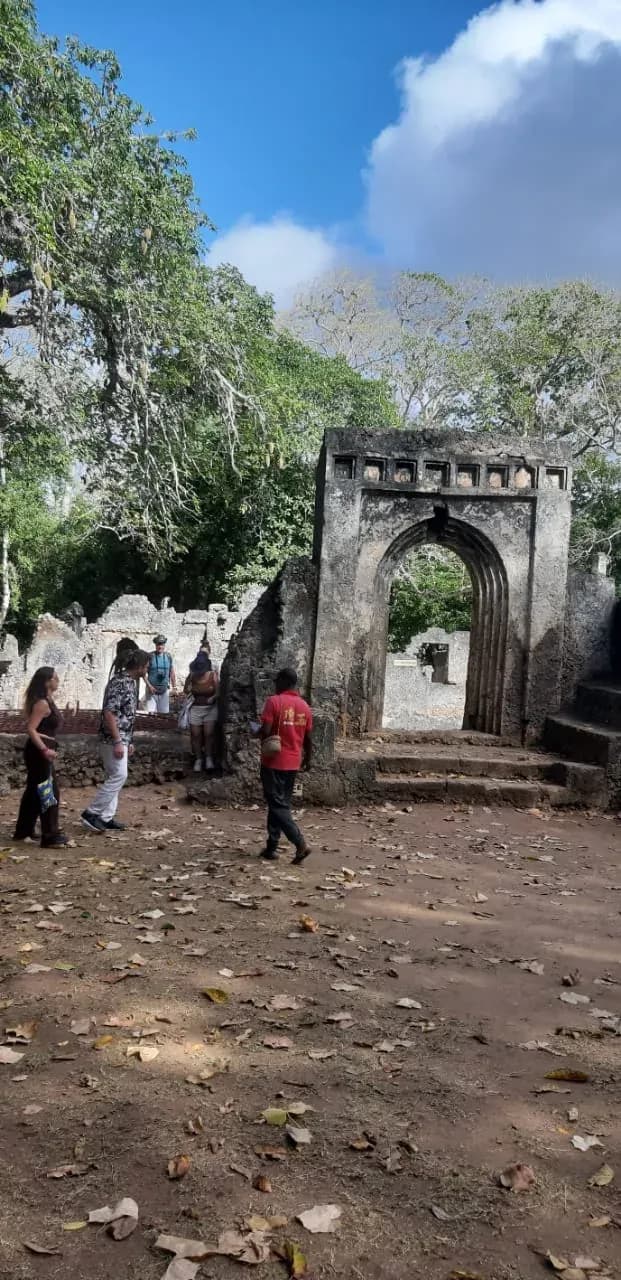
  • Visitors walking through the stone arch of the historic site, among the ruins and the trees.
    Culture

    Historic Malindi and the market

    A morning on foot through the old town of Malindi, taking in the Portuguese pillar, the harbour and the market where people really do their shopping.

    Duration
    1 day
    Transport
    Minivan
    Format
    Private or shared
    Price
    from $45 per person

    See the experience
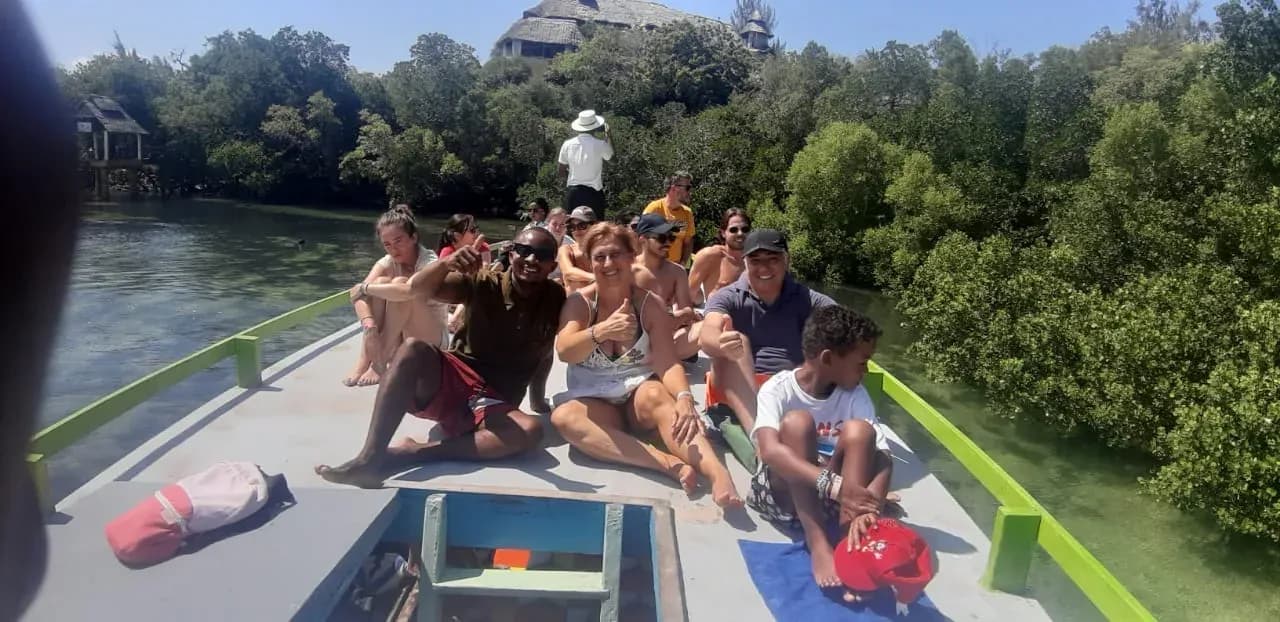
  • Guests sitting in the bow as the boat passes through the mangroves.
    Nature

    Mida Creek by canoe, inside the mangrove channels

    A few hours by canoe in the channels of Mida Creek, with the tide deciding the time and the route. You really do paddle, and you move in silence.

    Duration
    1 day
    Transport
    Canoe or kayak
    Format
    Private or shared
    Price
    from $40 per person

    See the experience

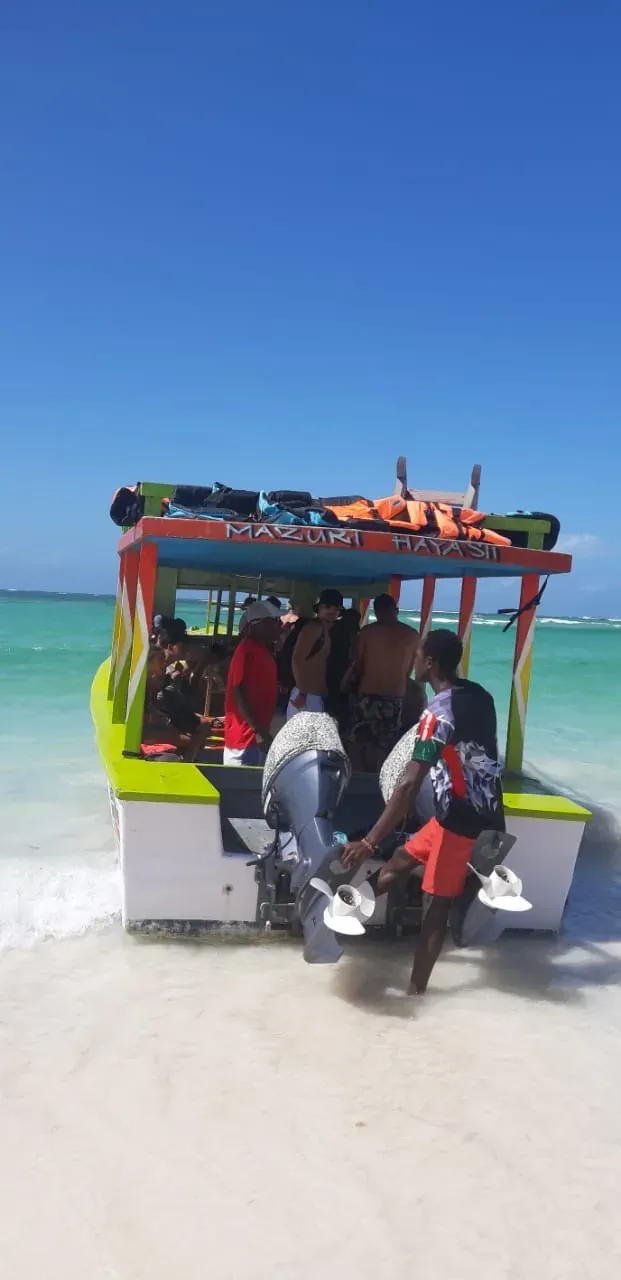
  • The colourful excursion boat moored on the sandbank, guests aboard and turquoise water all around.
    Ocean

    Watamu Marine Park, a morning on the reef

    A morning on the water between reef and lagoon, on a route adapted to the sea, the tide and what the group can manage.

    Duration
    1 day
    Transport
    Boat
    Format
    Private or shared
    Price
    from $50 per person

    See the experience

Want to know if this fits the days you have?

Tell me how many of you there are and when: I'll tell you what's realistic and what isn't.

Get a proposal from JohnWhatsApp